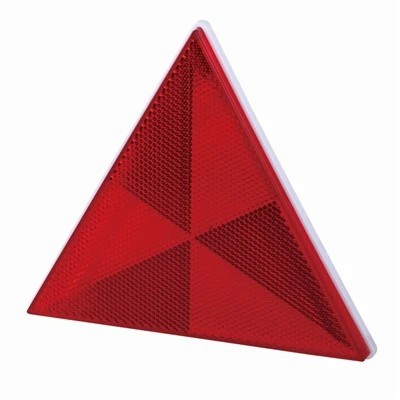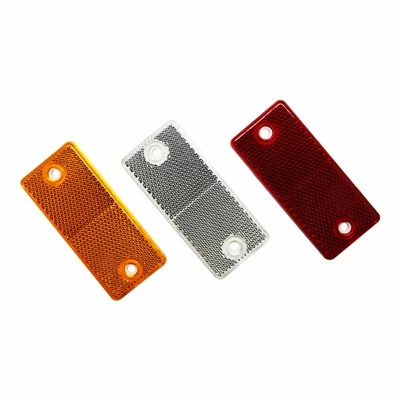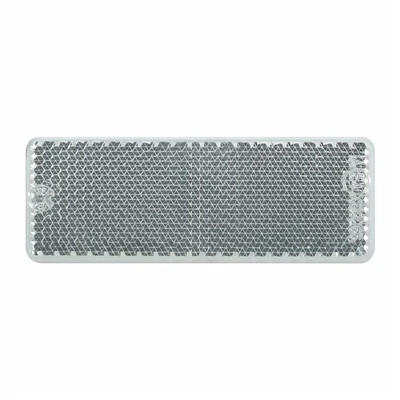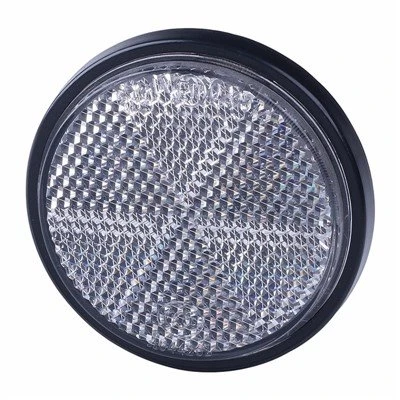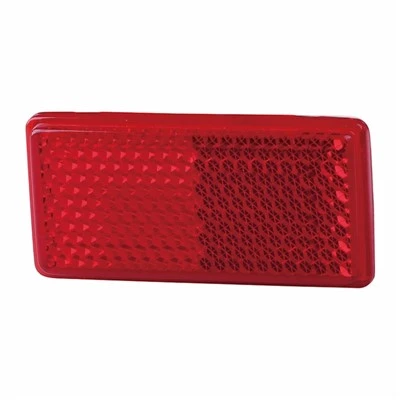
Rear reflectors for large vehicles utilize a specially designed aluminum substrate and a diagonal-stripe pattern to provide nighttime warning capabilities based on the principle of retro-reflection. As a passive safety device that functions without an external power source, it is a mandatory safety component for commercial vehicles.
The core mechanism relies on a micro-prismatic structure or a layer of glass microspheres covering the aluminum substrate. When light strikes these microscopic structures, it follows the optical law of reflection-where the angle of incidence equals the angle of reflection-directing the majority of the light back toward the source. The diagonal-stripe design increases the effective reflective surface area, ensuring high visibility from various viewing angles, while the choice of aluminum balances the need for weather resistance with structural strength.
Industry standards typically specify an aluminum plate thickness of 1.0–1.5 mm to balance strength and weight, with thicker versions better suited to the vibration-prone environments of long-haul transport. Among the two mainstream configurations-rectangular and diagonal-stripe-the diagonal-stripe design offers superior water drainage and dirt resistance in rainy or foggy conditions. These technical variations allow different vehicle models to select the most suitable solution based on specific operating conditions.
In real-world road applications, these reflectors must meet regulatory requirements for reflectivity, such as those outlined in the GB7258 standard. Performance is significantly influenced by the installation angle and surface cleanliness; proper tilted installation maximizes the reflective effect. In foggy conditions with visibility below 100 meters, compliant reflective markings can increase the distance at which following vehicles detect the vehicle by two to three times, thereby providing drivers with critical reaction time.